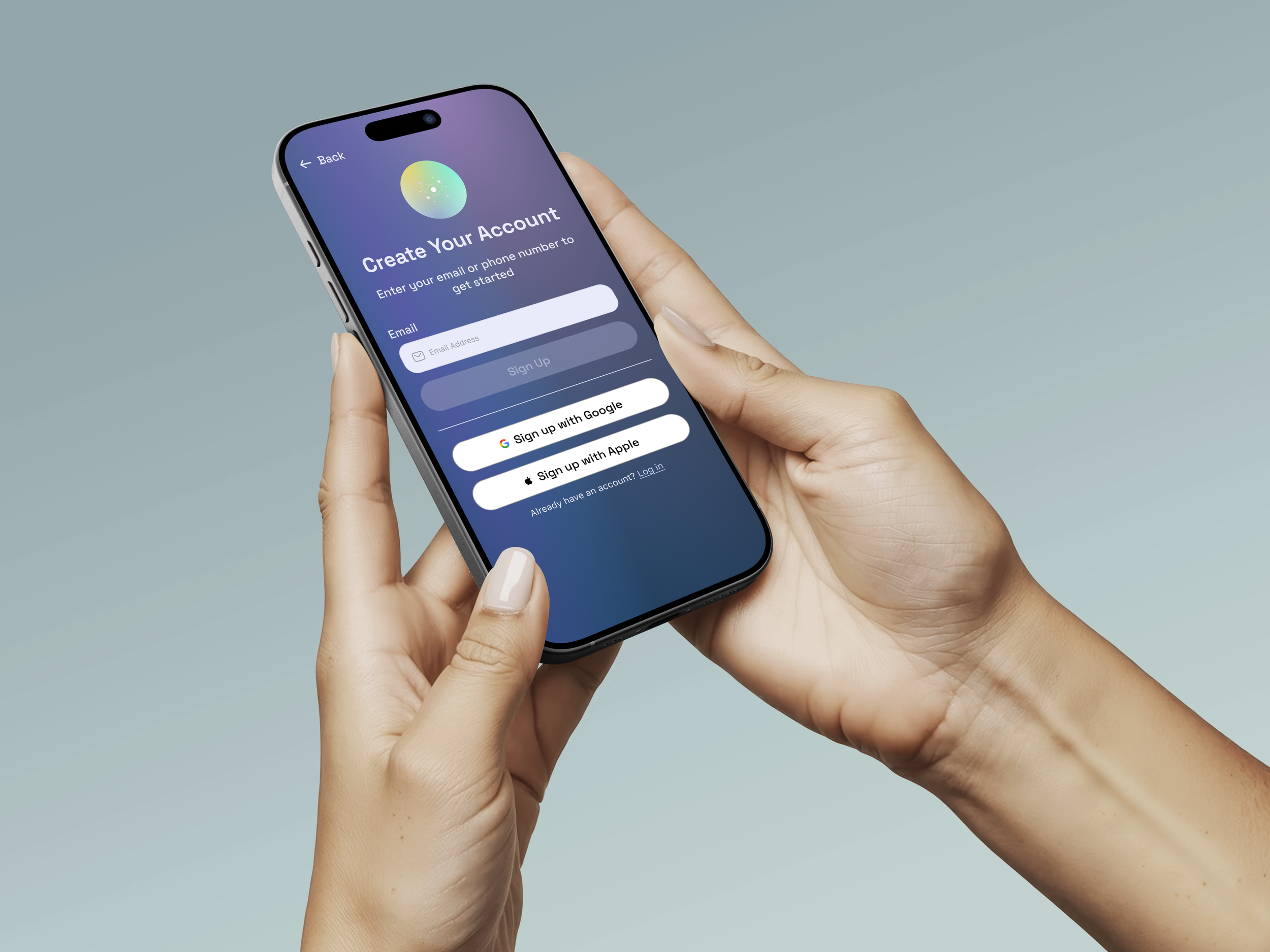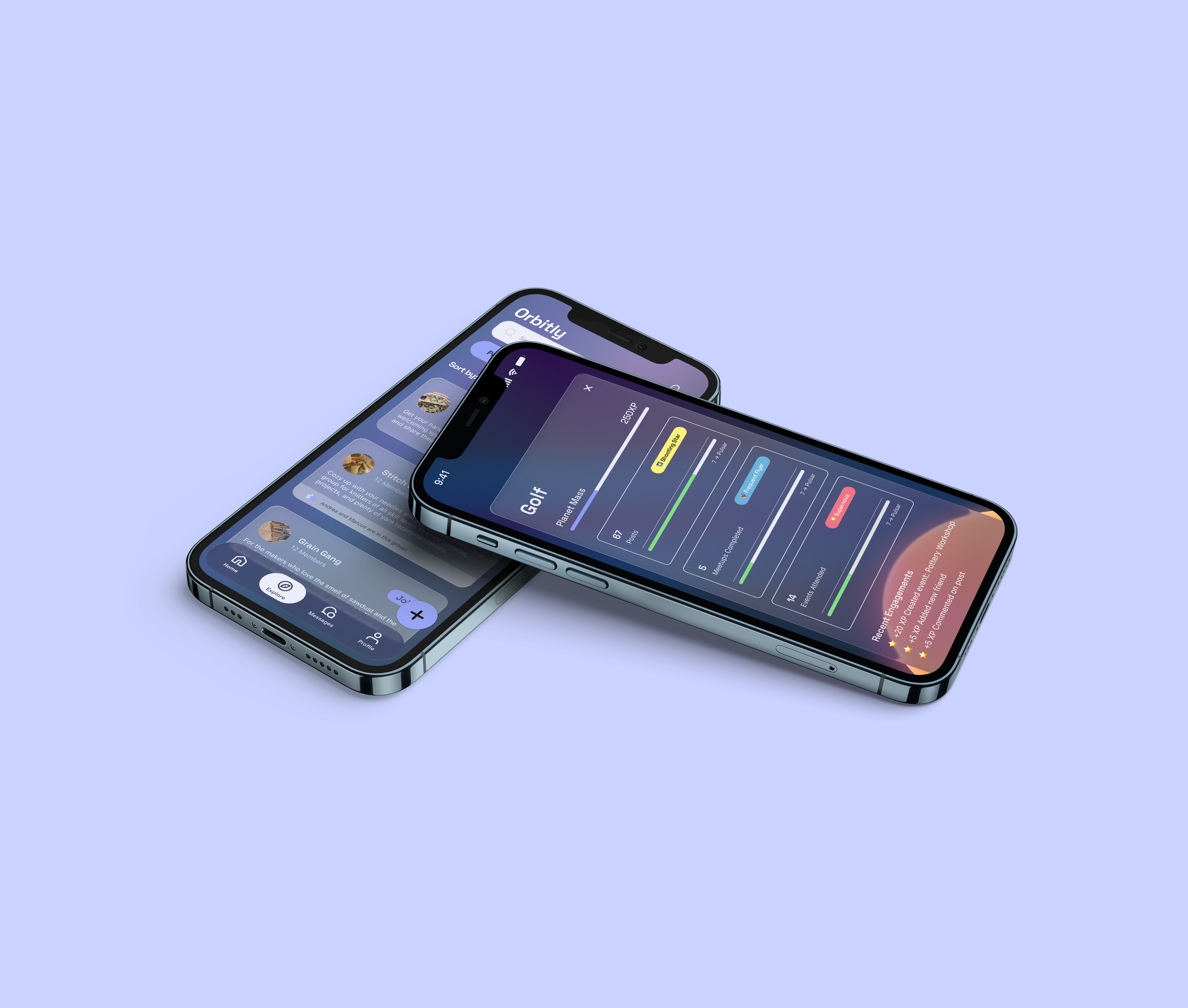
Orbitly
UX Design | UI Design
In the digital era, it’s becoming increasingly difficult for people to form meaningful connections with others offline. Often, it’s easiest to make friends by finding others that share common interests; however, traditional ways of meeting those with shared interests such as classes and meetups can be intimidating and expensive, and most social media applications have a broad scope of content and are focused on online rather than in-person community. Local communities are made up of people with diverse backgrounds and interests, but there’s no easy way for these people to connect with one another.
Orbitly aims to resolve this local community gap in the digital space by providing a place for people to share their progress in their hobbies, discover and vet others nearby with similar interests, and engage in meetups in both group and one-on-one settings to forge new bonds.
Objectives
-
Conduct competitor analysis and user interviews to determine the gap in the existing products and user needs.
-
Ideate user flows, stories and the vision of the product through sketching, storyboarding and wireframing and then conduct a usability test and gather user feedback.
-
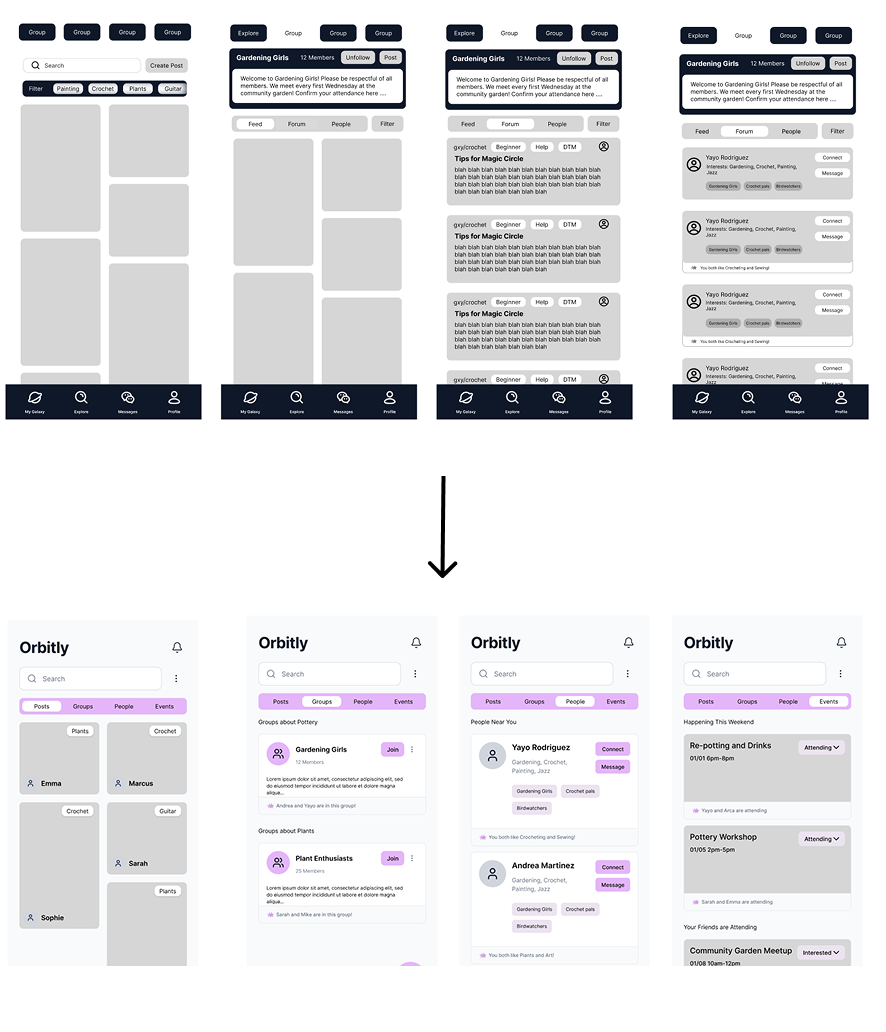
Implement feedback and redesign low fidelity into mid-fidelity designs through use of Figma Make that can be used in another usability test.
-
Implement feedback and design the final prototypes, which would be used in a final usability test.
-
Implement changes garnered from last round of usability testing for a final comprehensive, well-rounded prototype.
Design Process
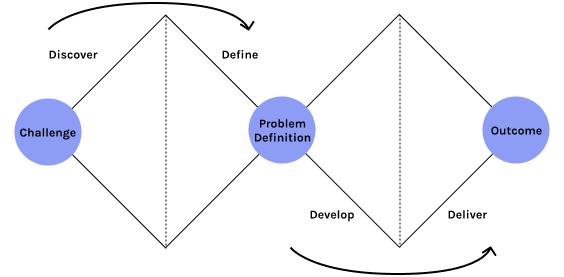
For our design process, we took the double diamond approach which emphasizes divergent thinking across four key phases: Discover, Define, Develop, and Deliver. This approach allowed us to explore the problem space broadly, narrow down key insights, iterate on solutions, and refine the final product through testing.
Usability Testing
Through our user testing, we aimed to understand user-application perception and identify prototyping bugs, missing features, and implementation of current features that could be improved.
We conducted 3 rounds of testing, using in-person tests for the early stage (lofi, midfi) testing for more thorough monitoring of potential user issues and personalized follow up questions, while our high fidelity tests were conducted through usertesting.com.
All of our tests employed a “think-aloud” methodology. We gathered notable quotes and interactions from users to affinity map and discover areas for improvement.